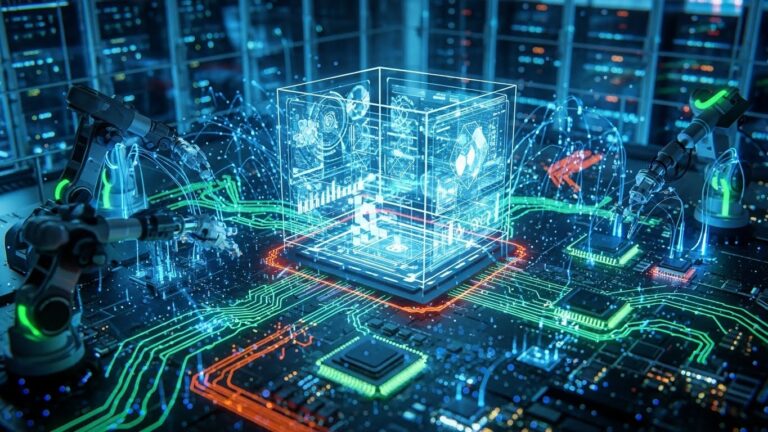

Technology is no longer just a part of our lives; it is the very fabric that weaves our modern existence. From the way we communicate to the manner in which industries operate, technology has left an indelible mark on society. Yet, what makes this era truly exciting is not just the prevalence of technology but the pace at which it is evolving. Emerging technologies are transforming the world at an unprecedented rate, promising innovations that were once the realm of science fiction. In this post, we explore some of the most impactful technologies and the ways they are reshaping our future.
The Rise of Artificial Intelligence
Artificial Intelligence (AI) has become the cornerstone of modern technological innovation. Its applications are vast, ranging from virtual assistants that organize our daily schedules to complex systems that optimize industrial operations. At its core, AI mimics human intelligence, learning from data to make decisions, predict outcomes, and automate tasks.
One of the most fascinating developments in AI is machine learning, a subset that enables systems to improve over time without explicit programming. Machine learning powers everything from recommendation algorithms on streaming platforms to advanced predictive analytics in healthcare. The potential of AI extends far beyond convenience; it can enhance human decision-making, accelerate scientific research, and even solve complex global challenges such as climate change modeling and epidemic prediction.
However, the rise of AI also raises ethical and societal concerns. Issues like bias in AI algorithms, data privacy, and job displacement must be addressed to ensure technology benefits society equitably. Companies and policymakers are increasingly working on frameworks that promote responsible AI use, balancing innovation with ethical responsibility.
The Transformative Potential of Quantum Computing
Quantum computing is poised to revolutionize industries by performing calculations at speeds unimaginable with classical computers. Unlike traditional computers that use bits as the smallest unit of data, quantum computers use qubits. These qubits can exist in multiple states simultaneously, enabling parallel processing on an unprecedented scale.
The implications of quantum computing are profound. In pharmaceuticals, quantum computers can simulate molecular interactions far more efficiently, accelerating drug discovery and personalized medicine. In finance, they can optimize complex portfolios and detect fraud patterns that would take classical computers years to analyze. Furthermore, quantum computing has the potential to enhance cybersecurity by creating unbreakable encryption methods.
Despite its promise, quantum computing is still in its infancy. Challenges such as qubit stability, error correction, and scalable hardware need to be addressed. Nevertheless, leading tech companies and research institutions are making significant strides, signaling that a quantum-powered future is closer than we think.
The Internet of Things: Connecting Everything
The Internet of Things (IoT) is transforming how we interact with the physical world by embedding intelligence into everyday objects. From smart home devices that adjust lighting based on your mood to industrial sensors that monitor equipment performance, IoT is creating a seamlessly connected ecosystem.
IoT is particularly influential in sectors like healthcare, agriculture, and transportation. In healthcare, wearable devices monitor vital signs in real-time, alerting medical professionals to potential health issues before they become critical. In agriculture, smart sensors track soil conditions and crop health, enabling precision farming that maximizes yield while minimizing resource consumption. Transportation systems leverage IoT for smart traffic management, reducing congestion and enhancing safety.
While IoT offers convenience and efficiency, it also raises concerns about data security and privacy. As more devices become interconnected, the potential for cyberattacks increases. Building robust security protocols is essential to protect sensitive information and maintain public trust in IoT technologies.
Blockchain Beyond Cryptocurrency
Blockchain technology is most commonly associated with cryptocurrencies like Bitcoin, but its applications extend far beyond digital money. At its core, blockchain is a decentralized ledger that ensures transparency, security, and immutability. This makes it ideal for industries where trust and verification are critical.
Supply chain management has seen significant benefits from blockchain adoption. By tracking products from origin to consumer, companies can enhance transparency, reduce fraud, and improve operational efficiency. In finance, blockchain facilitates secure and instant cross-border transactions, reducing reliance on traditional intermediaries. Additionally, blockchain is being explored for secure voting systems, intellectual property protection, and even healthcare record management.
The challenge with blockchain lies in scalability and energy consumption, particularly for proof-of-work systems. However, innovations like proof-of-stake and hybrid models are addressing these concerns, making blockchain increasingly practical for real-world applications.
Renewable Energy and Technological Innovation
Technology is not only transforming digital landscapes but also addressing some of the most pressing environmental challenges. Renewable energy technologies such as solar, wind, and hydropower are advancing rapidly, driven by the need to reduce carbon emissions and combat climate change.
Innovations in energy storage, particularly in battery technology, are crucial for maximizing the potential of renewable energy. Advanced batteries can store excess energy generated during peak production periods and release it during demand spikes, ensuring a stable and reliable power supply. Smart grids complement this by optimizing energy distribution based on real-time consumption data.
Moreover, emerging technologies like green hydrogen and energy-efficient building materials are set to further reduce humanity’s ecological footprint. By integrating these technologies with AI and IoT, we can create smart, sustainable cities that are both environmentally friendly and highly efficient.
Biotechnology and the Future of Healthcare
Biotechnology is redefining healthcare by leveraging biological systems and organisms to develop innovative treatments and therapies. Gene editing technologies, such as CRISPR, allow scientists to modify genetic sequences with unprecedented precision, potentially curing genetic disorders and combating diseases at their root cause.
Personalized medicine is another significant trend. By analyzing a patient’s genetic makeup, healthcare providers can tailor treatments that are more effective and minimize adverse effects. AI plays a pivotal role here, analyzing vast datasets to identify patterns that human doctors might miss.
The integration of biotechnology with wearable devices and IoT enables continuous health monitoring, early disease detection, and proactive healthcare management. This convergence of technologies promises a future where healthcare is not only reactive but predictive, enhancing both longevity and quality of life.
Robotics and Automation in the Modern World
Robotics and automation are reshaping industries by performing tasks that are repetitive, dangerous, or highly precise. In manufacturing, robots increase productivity and consistency, while in logistics, automated systems streamline warehousing and supply chain operations. The rise of autonomous vehicles represents the next frontier in robotics, with the potential to revolutionize transportation, reduce accidents, and increase efficiency.
Service robots are also becoming more prevalent, assisting in areas like elderly care, customer service, and hazardous material handling. These robots not only perform physical tasks but are increasingly equipped with AI, enabling them to interact intelligently with humans.
Despite the benefits, the rapid adoption of robotics and automation raises questions about employment and workforce displacement. Reskilling and education initiatives are critical to ensure that workers can adapt to new roles in an increasingly automated world.
The Ethical and Social Implications of Emerging Technologies
While emerging technologies offer immense potential, they also bring complex ethical and social challenges. Issues such as data privacy, algorithmic bias, job displacement, and environmental impact require careful consideration. Society must strike a balance between embracing innovation and maintaining ethical standards.
Governments, corporations, and individuals all have roles to play in ensuring responsible technological development. Policies that encourage transparency, inclusivity, and accountability are essential. Additionally, fostering public understanding of technology helps build trust and empowers people to make informed decisions about its adoption.
Conclusion: Embracing the Future with Awareness
The rapid evolution of technology presents a future filled with promise and possibility. Artificial intelligence, quantum computing, IoT, blockchain, renewable energy, biotechnology, and robotics are not just abstract concepts—they are transforming industries, economies, and daily life. Yet, the true potential of these technologies can only be realized if society navigates the accompanying ethical, social, and environmental challenges thoughtfully.
As we stand at the threshold of this new technological era, embracing innovation with awareness and responsibility is key. The future is not something that simply happens to us; it is something we can shape through the choices we make today. By fostering a culture of responsible innovation, society can harness technology’s transformative power to build a world that is not only advanced but equitable, sustainable, and inspiring.
About the Author