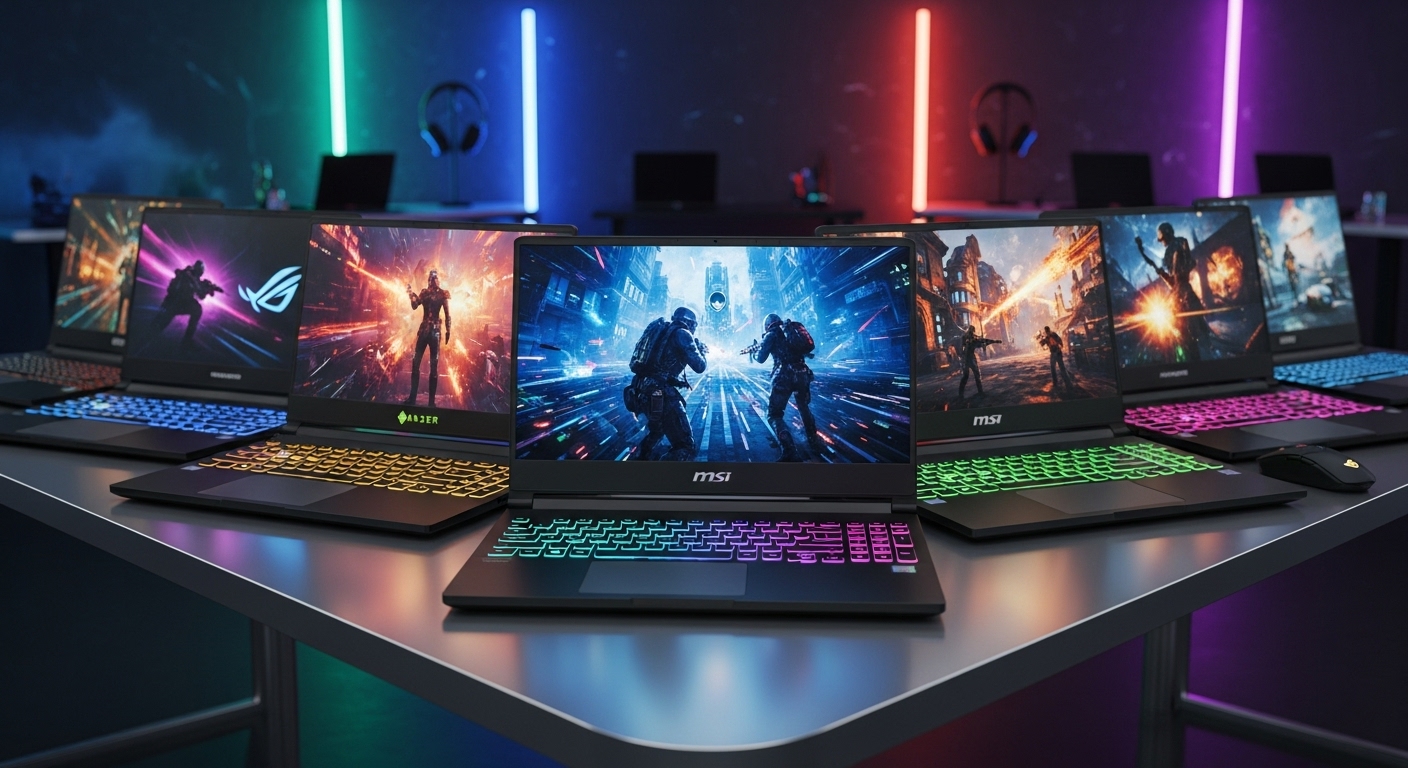
In the evolving world of gaming, laptops are no longer second-best alternatives to desktop rigs. Recent advances in CPU, GPU, display, cooling, and power efficiency have made gaming laptops true beasts capable of running the latest AAA titles, competitively handling esports, and even serving creators with heavy workloads. Choosing the best gaming laptop of the year means balancing power, portability, thermals, display quality, and value. This article reviews what makes a great gaming laptop, surveys the top models from this year, compares their strengths and trade-offs, and provides guidance on what to look for when buying one.
What Defines a Great Gaming Laptop
Before diving into specific models, it is crucial to understand what features matter most in a gaming laptop and why. Performance rests largely on CPU and GPU. Modern laptop CPUs are more powerful than ever, with high core‐counts, high boost clocks, and hybrid architectures. But no matter how fast the CPU is, the GPU often dictates gaming performance, especially at high resolutions or with demanding visual effects like ray tracing. A powerful GPU is therefore essential.
Display is another key area. For competitive gaming, refresh rates of 120Hz, 144Hz, 240Hz or more make a real difference, particularly in fast genres like shooters and racing. For immersive single‐player games, OLED or high contrast, high color accuracy panels elevate visuals dramatically. Resolution choices such as 1080p, 1440p, or even 4K change demands on GPU and battery life.
Cooler, more efficient thermal systems allow the laptop to sustain high performance without throttling. Fan design, cooling chamber, heat pipes, vapor chambers, and even chassis material all matter. Portability also becomes significant: weight, thickness, and battery capacity affect how practical a laptop is for mobile gaming or travel.
Other important aspects include memory (RAM), storage (SSD speed and capacity), connectivity (ports, wireless), keyboard quality, build quality, and extras like RGB lighting, webcam, speakers. A great gaming laptop does not excel in just one domain; it balances strengths across many.
Key Trends in Gaming Laptops This Year
Understanding trends helps in making informed choices. Some patterns seen this year:
- AI Enhancement: Several new laptops include AI acceleration, CPUs with built-in AI cores, to assist tasks like upscaling, frame generation, or auto-optimizing game settings.
- Higher Tier GPU Options: With newer GPU generations, laptop models are pushing RTX 50-series offerings (or their equivalents). This allows gamers to more reliably run modern games at QHD or high refresh rates.
- Better Displays: More mini-LED and OLED panels are becoming standard in higher tiers. Wide color gamut, high contrast ratios, HDR support, and high refresh rates are more common.
- Portability vs Power: There’s a stronger segmentation. Ultra-portable high-end models (14- to 16-inch) emphasize lighter weight, good battery life, and still strong GPU power. At the other end are 17- to 18-inch “desktop replacement” gaming laptops that maximize performance at the cost of size and weight.
- Cooling Innovations: New designs using vapor chambers, layered heat pipes, multiple fans, and better airflow are helping control temperatures and maintain performance under load better than older designs.
The Top Gaming Laptops of the Year
Here are several standout models of the year, categorized by what they do best. Each has strengths and trade-offs. The best one for a given gamer depends on priorities like budget, portability, display, and performance.
ROG Strix Scar 18 (2025) — Ultimate Powerhouse
This laptop embodies what many high-end gamers want when money is less of a concern: maximum GPU horsepower, large display, high refresh rate, and top-tier cooling. With an Intel Ultra 9 processor and NVIDIA GeForce RTX 5090 in its top configuration, plus an 18-inch mini-LED display, it handles AAA titles without compromise. RGB lighting, aggressive fan curves, and a premium build make it flashy.
It is bulky and heavy, not suited for frequent travel. Battery life under gaming load is limited. If you want desktop-level performance in laptop form and don’t mind the size, this is among the best.
MSI Stealth A16 AI+ — Portability and Strong Performance
For those who need something more travel-friendly without sacrificing gaming performance, this model delivers. It features a 16-inch OLED or high refresh mini-LED panel, good quality GPU (RTX 5070 Ti / 5080 / 5090 options), and a powerful CPU such as Ryzen AI 9 or similar.
Its strengths lie in its lightweight build relative to power, excellent display quality, and good port selection. Trade-offs include noticeable heat under sustained gaming load and battery life dropping drastically when pushed. Still, for mobile gaming, streaming, or content work, it hits a very sweet spot.
Lenovo Legion 7i Gen 10 — Premium Balance
The Legion 7i Gen 10 stands out for combining very high performance with a polished design. It offers options for OLED panels with high refresh rate, full-power GPUs, and CPUs that can sustain heavy workloads. The build quality is solid; keyboard, trackpad, and thermals are among the better ones in its class.
What it may lack compared to the absolute premium is that it still weighs more than the ultra-thin models and is less flashy in terms of aesthetics. Battery life is better than big desktop replacements, but still limited under gaming.
Razer Blade 14 / Blade 16 — Stylish and Compact
Razer’s Blade series has long been known for sleek chassis and premium materials. The newest models bring newer GPUs, better displays, and reduced weight in some configurations. The Blade 14 is particularly interesting for gamers who want ultra portability without giving up too much power.
The trade-off is cost — these laptops are expensive, especially in premium configurations. Also, thin designs sometimes result in tighter thermal constraints, meaning under very heavy gaming loads they may throttle more than bulkier laptops.
MSI Vector 16 HX / Raider Series — High Frame-Rate Enthusiasts
For gamers whose main priority is high FPS, especially in competitive titles, these gaming laptops are configured with high refresh displays (240Hz or more), high power GPU/CPU combinations, and robust cooling systems. The Raiders and Vector HX line deliver strong frame rates in competitive shooters but tend to be large, hot under load, and bulky to carry.
If you play fast paced games and want every frame possible, these are among the best choices.
Budget / Value Picks
There are excellent value offerings that give strong performance without the premium price. Laptops with RTX 4050 / 4060 GPUs or their equivalents, solid displays (120-165Hz), and decent build quality can serve gamers who play at 1080p or 1440p without needing 4K. Brands in this segment often trade off on weight, cooling, or premium chassis materials to keep cost down.
Examples include laptops like the Dell G-series, Lenovo LOQ series, HP Victus, and ASUS TUF models. These do not reach the extremes of premium machines, but for many gamers they provide the best price-to-performance ratio.
Comparing Strengths and Trade-Offs
To choose the right gaming laptop, you have to decide which trade-offs you are willing to accept.
- Power vs Portability: More power usually means larger size, more weight, more noise, more heat, and lower battery life when unplugged. If you travel or move often, models that favor portability may serve you better.
- Display Quality vs Cost: OLED or mini-LED high refresh rate displays are expensive. If you want excellent visuals, be ready to pay. For purely competitive gaming, a simpler 1080p high refresh screen may be more useful.
- Thermal Performance vs Noise: Some powerful laptops manage heat well and quietly, others get loud. If noise bothers you, check reviews for noise levels under load.
- Battery Life vs Gaming: No gaming laptop matches ultrabooks in battery life when gaming. If you need long unplugged use, know that gaming drains battery quickly.
- Upgradeability and Durability: RAM and SSD upgrades, sturdy build, good hinge design, and reliable cooling are important for long-term use.
Who Should Pick Which Kind
Depending on what kind of gamer or user you are, different models are best suited:
- If you are an esports competitor or enjoy high FPS in fast shooters, go for a laptop with a premium GPU (RTX 4080/4090 or equivalent), high refresh rate display (240Hz or more), good cooling, and willing to accept size and cost.
- If you are both gamer and creator (streaming, content editing), then pick balance: strong CPU, GPU, good display with color accuracy, fairly portable design, but accept somewhat higher cost and perhaps a bit of weight.
- If you travel often or need a laptop for gaming and work/school, look for compact 14- to 16-inch machines, efficient components, better battery, and lighter build.
- If you are on a budget, pick models that give the best GPU you can afford, good display (at least 120Hz), 16GB RAM, 1TB SSD, possibly sacrificing high resolution or extreme settings.
Notable Models of the Year: Highlights
Here are some laptops that have stood out this year in benchmarks, reviews, and popularity among gamers and reviewers:
- The ROG Strix Scar 18 (2025) for those who want almost desktop performance in a laptop form. It shows what is possible when cost and portability constraints are less of a concern. SFGATE
- The MSI Stealth A16 AI+ as one of the best portable high-performance machines, especially with strong displays and powerful internals. TechRadar
- Lenovo Legion 7i Gen 10 for premium design, quality display options, strong performance, and good balance. WIRED+1
- Razer Blade 14 (2025) for those seeking ultra-portable rigs without sacrificing too much GPU power. Windows Central
What to Look for in Your Market and Budget
When shopping for a gaming laptop, keep in mind local market conditions, pricing, and availability. Sometimes import costs, taxes, and warranties matter more than raw specs. Also, in some regions, aftersales support, spare parts, repairability, and brand reputation are critical.
Here are some spec benchmarks and minimums you might aim for in different tiers:
- For Entry / Budget Level: GPU like RTX 4050 / 4060 or equivalent, CPU mid-range (6-8 cores), display 1080p at 120-165Hz, 16GB RAM, 512GB SSD.
- For Mid-Range / Sweet Spot: GPU RTX 4070 / 4080 (Laptop versions) or similar, CPU high-end mobile CPU (8-12 cores or hybrid architecture), display QHD 165-240Hz or OLED, 1TB SSD, plenty of cooling.
- For High / Enthusiast Level: GPU RTX 4080/4090 or upcoming equivalent, CPU highest tier mobile chip, display 4K / mini-LED / OLED with high refresh or dual-mode, 32-64GB RAM, large SSD, superior cooling.
Conclusion
This year has seen astonishing improvements in gaming laptops. The gap between desktops and laptops continues to shrink. Whether you want raw power, portability, premium display, or the best value, there are excellent options. The best gaming laptop of the year for you depends upon which trade-offs you are ready to make and what you value most in terms of performance, portability, display, and price.
When buying one, think ahead: what games you will play, whether you need mobility, how long you want the laptop to serve you, and what features you’ll regret skipping. Choosing wisely will give you a machine that delivers joy in gaming for years to come.
About the Author