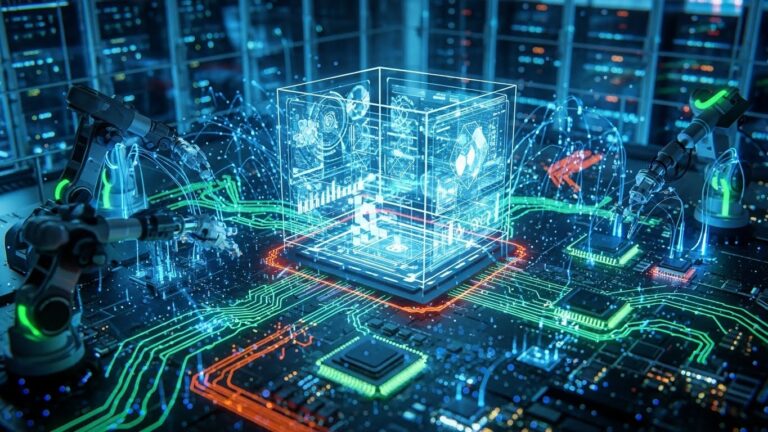
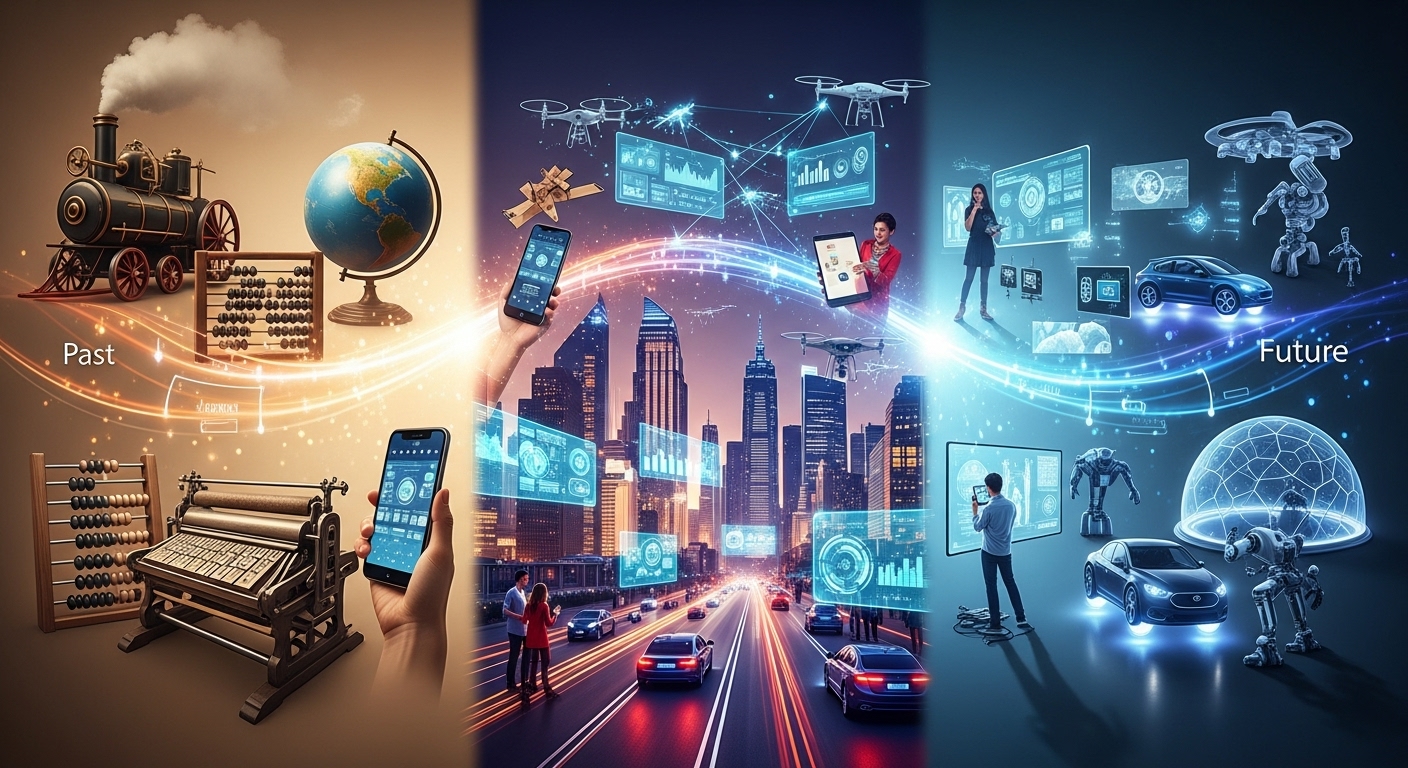
Technology has always been humanity’s most powerful tool — a force that shapes societies, economies, and even individual lives. From the discovery of fire to the rise of artificial intelligence, each leap forward has rewritten what it means to live, learn, and connect. In the twenty-first century, this evolution has reached unprecedented speed and scale, transforming nearly every aspect of human existence. This blog explores the vast journey of technology, how it has evolved, where it stands today, and where it might lead us next.
The Dawn of the Digital Age
The late twentieth century laid the foundation for the digital revolution. The invention of the microprocessor in the 1970s sparked an unstoppable chain reaction. Computing, once confined to massive, expensive machines in research labs, began to shrink in size while growing in power. By the 1980s, personal computers entered homes, schools, and offices, marking the beginning of an era where information became accessible to ordinary people.
The 1990s brought the internet, a technological milestone that redefined communication. Suddenly, the world was connected in ways never imagined before. Emails replaced letters, websites replaced encyclopedias, and online communication became the new norm. The internet didn’t just change technology — it changed humanity. It blurred borders, democratized information, and became the platform for innovation across every field imaginable.
The Smartphone Revolution
If the 1990s were the age of the desktop, the 2000s belonged to the mobile phone. What began as a communication device quickly evolved into a handheld computer. The introduction of smartphones revolutionized how people interacted with the world. With a single device, individuals could call, text, photograph, shop, bank, learn, and even run businesses.
Touchscreens replaced buttons, and mobile operating systems became ecosystems. The rise of app stores opened a universe of possibilities. Social media, streaming platforms, mobile gaming, and online marketplaces all found their home in users’ pockets. This mobility turned technology from a tool into a constant companion. The world became smaller, faster, and more personal.
The Rise of Cloud Computing
As data exploded, the need for scalable storage and processing grew urgent. Enter cloud computing — one of the most transformative innovations in modern technology. The cloud shifted the paradigm from owning hardware to accessing services over the internet. Companies no longer needed massive on-site servers. Individuals could back up photos, share files, and collaborate in real time from anywhere.
This decentralization of computing power laid the groundwork for global connectivity. Businesses scaled faster, startups emerged overnight, and software became a service rather than a product. Cloud technology also enabled artificial intelligence, big data analytics, and the Internet of Things to flourish by providing virtually limitless computing resources.
Artificial Intelligence: Machines That Learn
Artificial Intelligence (AI) has evolved from science fiction into scientific reality. Early AI systems relied on rigid programming, but today’s models can learn, adapt, and make decisions. Machine learning and deep learning have allowed computers to recognize speech, translate languages, drive cars, and even diagnose diseases.
AI now underpins almost every digital experience. Recommendation engines suggest what to watch or buy. Chatbots handle customer service. Algorithms analyze millions of data points to optimize logistics, healthcare, finance, and education. The once-unimaginable dream of machines that think is now part of everyday life.
However, this progress raises ethical and philosophical questions. Who is responsible when an autonomous car crashes? Can AI exhibit bias? Should machines make life-or-death decisions? These debates define the next frontier of technological evolution — not just what AI can do, but what it should do.
The Internet of Things: A Connected World
Imagine waking up in a house that knows your schedule. The coffee maker starts brewing as your alarm rings. The thermostat adjusts the temperature to your preference. Your car’s GPS maps the fastest route to work. This interconnected network of devices, known as the Internet of Things (IoT), has turned science fiction into daily reality.
IoT integrates sensors, software, and connectivity into everyday objects — from smartwatches to industrial machines. It generates massive amounts of data that help improve efficiency, comfort, and safety. Smart cities use IoT to manage traffic and energy. Farmers use it to monitor crops and soil. Hospitals track patients’ vital signs in real time.
While the benefits are immense, IoT also presents challenges. Security breaches in connected devices can have real-world consequences. Privacy concerns continue to grow as data collection becomes ubiquitous. Balancing convenience with control remains a central concern in this new era of connectivity.
The Era of Automation
Automation is the natural extension of technological progress. Machines once replaced manual labor; now, algorithms replace cognitive tasks. From assembly lines to chat support, automation has redefined productivity. Robots operate with precision and consistency, performing tasks that are dangerous, repetitive, or impossible for humans.
In industries like manufacturing, automation has boosted efficiency dramatically. In finance, algorithms execute trades in milliseconds. In logistics, autonomous drones and delivery bots are changing distribution networks. Even creative fields are being reshaped as AI systems generate art, music, and writing.
However, automation also challenges traditional employment structures. As machines handle more tasks, workers must adapt by developing new skills. The conversation around the “future of work” now focuses not just on what jobs will exist but on how humans and machines can collaborate rather than compete.
Virtual and Augmented Reality: Redefining Experience
Virtual Reality (VR) and Augmented Reality (AR) have blurred the boundary between the physical and digital worlds. VR creates immersive environments that transport users to entirely new realities, while AR overlays digital information onto the real world. Together, they are transforming entertainment, education, and professional training.
In gaming, VR allows players to step inside fantastical universes. In education, students can explore historical landmarks or the human body in 3D. In healthcare, AR assists surgeons with precision by projecting vital information onto their field of view. Even in retail, customers can “try on” clothes or visualize furniture in their homes before buying.
As VR and AR technologies improve, they promise to redefine how we learn, socialize, and work. The emergence of virtual collaboration spaces hints at a future where physical distance no longer limits human interaction.
Blockchain and Decentralization
Blockchain technology introduced a new way to store and verify information. At its core, blockchain is a distributed ledger — secure, transparent, and immutable. While most people associate it with cryptocurrencies, its potential extends far beyond digital money.
Blockchain can transform industries by ensuring trust without intermediaries. Supply chains become traceable, voting systems more secure, and contracts self-executing through smart contracts. It has given rise to decentralized finance (DeFi) and digital assets, challenging traditional institutions.
The concept of decentralization also influences how we view ownership, privacy, and governance in the digital world. It pushes back against the concentration of power among a few tech giants, offering an alternative vision of the internet — one built on transparency and community rather than control.
Quantum Computing: The Next Frontier
Beyond classical computing lies quantum computing, a field that promises to revolutionize problem-solving. Instead of relying on bits that represent either 0 or 1, quantum computers use qubits, which can exist in multiple states simultaneously. This allows them to perform complex calculations at speeds unimaginable by traditional computers.
Quantum computing could unlock breakthroughs in materials science, cryptography, pharmaceuticals, and artificial intelligence. Problems that currently take supercomputers years to solve could be handled in seconds. However, quantum computing remains in its infancy. Building stable, scalable systems is a massive scientific challenge. Still, its potential ensures that it will remain one of the most exciting frontiers in technology.
Cybersecurity: Protecting the Digital Frontier
As technology becomes more integrated into daily life, cybersecurity has emerged as one of the most critical fields of the modern era. Every connected device is a potential entry point for cyber threats. Hackers exploit vulnerabilities, ransomware locks critical systems, and data breaches expose personal and financial information.
Cybersecurity has evolved from firewalls and antivirus software to advanced threat detection powered by AI. Companies now invest heavily in encryption, multi-factor authentication, and security education. Yet, the human element remains the weakest link — phishing and social engineering continue to be major threats.
The balance between security and privacy is also under constant debate. While surveillance technologies can protect against crime, they can also infringe upon individual freedoms. Ensuring a safe digital environment without sacrificing privacy remains one of the defining challenges of our time.
Sustainable Technology: Building a Greener Future
As the planet faces the consequences of industrialization and climate change, technology is becoming a key player in sustainability. Innovations in renewable energy, electric transportation, and smart infrastructure are driving a green revolution.
Solar panels, wind turbines, and battery storage systems are making clean energy more accessible and affordable. Electric vehicles are reducing dependence on fossil fuels. Smart grids optimize energy distribution, and precision agriculture minimizes waste. Even data centers, once major energy consumers, are now designed for efficiency.
Sustainable technology isn’t just about minimizing harm; it’s about creating long-term harmony between progress and the planet. The future of innovation will be measured not only by performance but also by its impact on the environment.
The Human Side of Technology
While the achievements of technology are remarkable, they also reshape human behavior in complex ways. Social media connects people globally but can also isolate individuals. Information is abundant, yet misinformation spreads faster than ever. The line between convenience and dependence grows thinner each year.
Mental health professionals now study “digital fatigue” — the exhaustion caused by constant connectivity. Parents struggle to balance children’s screen time with real-world experiences. Workers navigate burnout in an always-online culture. These challenges remind us that technology, while powerful, must serve humanity — not replace it.
The future depends on balance. As we continue to innovate, we must ensure that empathy, ethics, and emotional intelligence evolve alongside our technical capabilities.
The Future of Technology: Where Do We Go Next?
The next few decades promise transformations even more profound than those behind us. Artificial General Intelligence could match or surpass human reasoning. Brain-computer interfaces may merge biology with technology, allowing direct communication between humans and machines. Space technology could make interplanetary travel possible for civilians.
Nanotechnology might revolutionize medicine, creating microscopic robots capable of repairing cells from within. Biotechnology could eradicate diseases and extend human lifespan. The blending of physical, digital, and biological systems will blur the boundaries of what it means to be human.
But with great power comes great responsibility. The ethical questions that arise will be as important as the technologies themselves. How much control should we give to machines? Who owns our data? Can innovation coexist with equality and sustainability?
The answers will determine whether technology remains a tool of empowerment or becomes a source of division.
Conclusion: The Endless Journey of Innovation
The story of technology is ultimately the story of humanity — our curiosity, creativity, and courage to dream beyond the possible. Each invention, from the wheel to the quantum computer, reflects a deep desire to improve life and push the limits of understanding.
We now live in an age where knowledge doubles faster than ever before. What once took centuries now happens in decades, sometimes even in years. The digital age has turned imagination into an engine of progress. Yet, amid this rapid transformation, one truth remains constant: technology is only as powerful as the people who use it.
The future is not written by machines but by minds — by the thinkers, builders, and dreamers who dare to see beyond the horizon. As we step into this next era of intelligent reality, our greatest challenge and opportunity lie in ensuring that technology continues to elevate humanity — not overshadow it.
About the Author