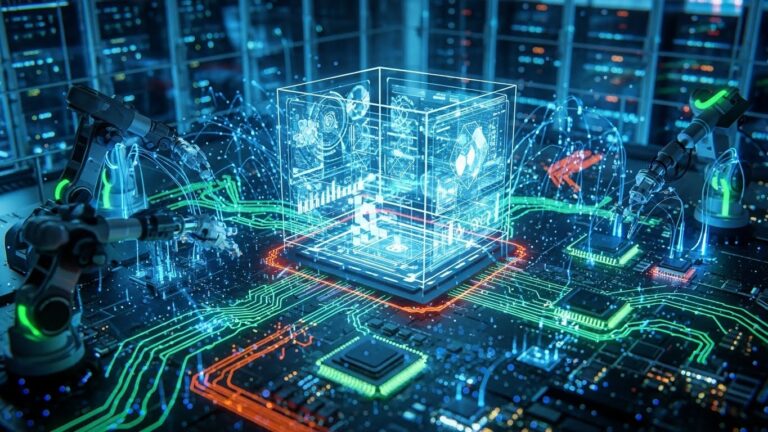

Technology has continuously transformed the way we live, work, and interact with the world. Over the last few decades, advancements in areas like artificial intelligence (AI), robotics, quantum computing, and biotechnology have set the stage for a new era of technological innovation. The rapid development and adoption of these technologies not only offer unprecedented opportunities but also present new challenges that will require careful navigation. In this blog post, we’ll explore some of the most exciting technological trends shaping our present and future.
The Rise of Artificial Intelligence and Machine Learning
Artificial Intelligence (AI) and Machine Learning (ML) are perhaps the most talked-about technologies of the 21st century. These fields have moved from theoretical concepts to practical applications that are transforming industries across the board. From self-driving cars to personal assistants like Siri and Alexa, AI is making its presence felt in every corner of our lives.
AI in Everyday Life
AI is no longer confined to research labs or sci-fi movies. It’s embedded in many tools we use every day. The rise of voice assistants, such as Google Assistant and Amazon’s Alexa, showcases how AI has become integrated into our daily lives. These systems can understand natural language, answer questions, and perform tasks like setting reminders, controlling smart home devices, or even making shopping recommendations based on past behavior.
In healthcare, AI is used to analyze medical images, assist in diagnosing conditions, and even predict patient outcomes. Machine learning algorithms can sift through vast amounts of medical data to detect patterns that might be missed by human eyes, improving accuracy and speed in diagnosing diseases.
The Future of AI and Automation
Looking ahead, AI and machine learning will continue to evolve, potentially becoming an integral part of more sectors, including education, law, and finance. One of the most exciting possibilities is the potential for AI-powered automation to revolutionize industries like manufacturing and logistics. Autonomous robots and drones are expected to perform tasks with greater efficiency, precision, and safety than human workers, leading to cost savings and increased productivity. However, this also raises important questions about job displacement and the future of work.
Quantum Computing: The Next Frontier in Computing Power
Quantum computing is one of the most fascinating technological advancements that could fundamentally change how we solve problems. Unlike traditional computers, which use binary bits (0s and 1s), quantum computers use qubits, which can exist in multiple states simultaneously. This ability to perform many calculations at once makes quantum computers exponentially more powerful than classical computers, especially when it comes to complex problems like cryptography, material science, and drug discovery.
Quantum Computing’s Potential Impact
In the near future, quantum computing could be used to solve problems that are currently beyond the reach of classical supercomputers. For instance, it could significantly accelerate the discovery of new drugs by simulating molecular structures with greater accuracy. In finance, quantum algorithms could optimize portfolios and model financial risks more effectively. In cybersecurity, quantum encryption could make data virtually unbreakable, creating new standards for data privacy.
Despite its potential, quantum computing is still in its infancy. Researchers are facing significant technical challenges in building stable and scalable quantum computers. However, tech giants like Google, IBM, and Microsoft are making strides in this area, and we may see more breakthroughs in the coming years.
The Rise of 5G and Its Impact on Connectivity
5G, the fifth generation of mobile internet technology, is poised to revolutionize the way we connect to the internet. With its ultra-fast speeds, low latency, and ability to connect more devices simultaneously, 5G has the potential to unlock a range of new technologies and services that were previously unimaginable.
Enhanced Connectivity for Smart Cities
One of the most exciting implications of 5G is its potential to power smart cities. With 5G’s ability to connect millions of devices in real-time, cities could become more efficient and responsive. For example, traffic systems could be optimized in real-time based on current traffic conditions, and public services could be enhanced by data collected from connected sensors and devices. Smart grids could better manage energy distribution, and waste management systems could be more efficient through connected sensors.
The Impact on Augmented Reality and Virtual Reality
5G is also expected to significantly improve the performance of Augmented Reality (AR) and Virtual Reality (VR). With low latency and faster data transfer speeds, 5G could make AR and VR applications more immersive and accessible. Whether for entertainment, education, or professional training, 5G will provide the infrastructure needed to deliver high-quality, real-time experiences to users. For example, remote surgeries and real-time gaming could see massive improvements in quality and reliability.
Biotechnology: Merging Biology with Technology
Biotechnology is another area where innovation is rapidly reshaping our world. The fusion of biology and technology is opening up new possibilities in healthcare, agriculture, and environmental sustainability. From gene editing to personalized medicine, biotechnology is providing groundbreaking solutions to some of humanity’s most pressing challenges.
Gene Editing and CRISPR
One of the most groundbreaking advancements in biotechnology is the development of CRISPR (Clustered Regularly Interspaced Short Palindromic Repeats), a technology that allows scientists to edit genes with unprecedented precision. This tool has the potential to cure genetic disorders, improve agricultural yields, and even protect against diseases like malaria.
While CRISPR holds immense promise, it also raises ethical concerns about its potential misuse. For example, the ability to edit human genes brings up questions about designer babies, the ethical implications of altering the human genome, and the potential for unintended consequences. Scientists, ethicists, and policymakers are still debating how to regulate gene-editing technologies in a way that maximizes benefits while minimizing risks.
Personalized Medicine
Biotechnology is also driving the growth of personalized medicine, where treatments and therapies are tailored to an individual’s genetic makeup, lifestyle, and environment. Advances in genomics have enabled doctors to create more targeted treatment plans, improving the effectiveness of therapies and minimizing side effects. In the future, we may see more widespread use of genomic data to predict and prevent diseases, leading to a shift from reactive to proactive healthcare.
Robotics: The Future of Automation
Robotics has been a rapidly growing field for years, and it continues to advance in exciting directions. From industrial robots that perform repetitive tasks in factories to surgical robots that assist doctors in performing complex procedures, robots are increasingly becoming part of our everyday lives.
Robots in Healthcare
In healthcare, robots are helping doctors perform surgeries with greater precision. Robotic surgery systems, like the da Vinci Surgical System, allow surgeons to perform minimally invasive procedures with enhanced accuracy. Robots are also being used to assist in elderly care, with robots capable of monitoring vital signs, helping with mobility, and even providing companionship for patients.
Autonomous Vehicles and Drones
Autonomous vehicles are another example of how robotics is changing our world. Self-driving cars, trucks, and drones could revolutionize transportation, making it safer and more efficient. In the near future, we might see autonomous vehicles becoming mainstream, reducing traffic accidents and optimizing delivery services. Drones are already being used for everything from delivering packages to inspecting infrastructure, and they are expected to become even more integral to our logistics and transportation networks.
The Internet of Things (IoT): Connecting the World
The Internet of Things (IoT) is a network of interconnected devices that communicate with each other over the internet. From smart home devices like thermostats and security cameras to industrial sensors that monitor manufacturing processes, IoT is expanding rapidly.
IoT in Everyday Life
In homes, IoT devices allow for greater convenience and energy efficiency. Smart thermostats learn your preferences and adjust temperatures accordingly, saving energy and money. Smart refrigerators can track food inventory and suggest recipes based on what’s inside, while wearables like fitness trackers monitor our health and provide data to help us live healthier lives.
Industrial IoT (IIoT)
In the industrial sector, the Industrial Internet of Things (IIoT) is revolutionizing manufacturing and logistics. Connected machines can monitor their own performance and alert operators when maintenance is needed, reducing downtime and increasing efficiency. Predictive analytics can be used to forecast equipment failures before they occur, helping companies save money and improve productivity.
Conclusion: The Road Ahead
The future of technology holds immense promise, offering transformative solutions to global challenges and improving the quality of life for billions of people. From AI and quantum computing to biotechnology and robotics, the innovations we are witnessing today are just the beginning. As these technologies continue to evolve and intersect, they will reshape industries, economies, and societies in ways we can’t fully predict.
However, along with these exciting advancements come important ethical, social, and environmental considerations. It is up to governments, businesses, and individuals to work together to ensure that these technologies are used responsibly and for the benefit of all. As we look toward the future, one thing is clear: technology will continue to play a central role in shaping the world of tomorrow, creating opportunities and challenges alike.
About the Author